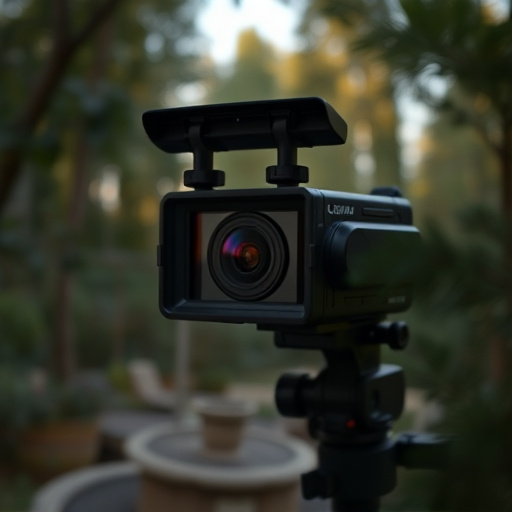
Spy Camera Artificial Intelligence (AI) Integration has become essential for enhancing security and privacy, using computer vision algorithms to analyze light reflections and identify hidden cameras based on their unique characteristics. This method, leveraging machine learning models trained on extensive datasets, detects even concealed or distorted cameras in high-risk environments. The Light Reflection Method, powered by AI, locates hidden cameras by capturing and interpreting reflections from various angles, surpassing traditional methods. With implications spanning smart cities to residential buildings, this technology alerts users about potential surveillance devices. Future advancements focus on AI adaptability, dataset diversity, and thermal imaging integration to improve accuracy and reduce false positives, making covert surveillance increasingly difficult.
In the digital age, privacy concerns have led to an alarming rise in spy camera usage. This article explores advanced spy camera detection techniques, focusing on the Light Reflection Method, a revolutionary approach leveraging artificial intelligence (AI) integration. We delve into the fundamentals of spy camera detection, dissecting how AI enhances existing methods and introduces novel solutions. Understanding these advancements is crucial for navigating our increasingly connected world, ensuring data security, and privacy protection against hidden surveillance.
- Understanding Spy Camera Detection: The Basics
- Artificial Intelligence Integration: Enhancing Detection Techniques
- Light Reflection Method: A New Approach
- Implications and Future of Spy Camera Detection Technology
Understanding Spy Camera Detection: The Basics
Understanding Spy Camera Detection: The Basics
Spy camera detection has become increasingly important in an era where artificial intelligence (AI) integration in surveillance technology is on the rise. The basic principle behind this technique involves utilizing light reflection to uncover hidden cameras, which can be a game-changer for privacy and security measures. By analyzing subtle changes in light patterns, AI algorithms can identify the unique characteristics of spy cameras, including their size, shape, and position.
This method leverages the power of computer vision, where AI models are trained to recognize camera lenses as they reflect light differently from other objects in a scene. The reflection pattern can be distorted or hidden by the camera’s design, but advanced AI techniques can still detect these anomalies. This technology is particularly useful in high-risk areas such as government facilities, corporate offices, and sensitive personal spaces, ensuring that privacy breaches remain undetected.
Artificial Intelligence Integration: Enhancing Detection Techniques
The integration of Artificial Intelligence (AI) has revolutionized spy camera detection techniques, significantly enhancing their effectiveness and accuracy. By leveraging machine learning algorithms, these systems can analyze vast amounts of visual data in real time, identifying patterns and anomalies indicative of hidden cameras. AI models are trained on extensive datasets, enabling them to recognize various camera types, angles, and even sophisticated disguises. This advanced detection capability ensures that individuals and organizations alike can stay ahead of potential privacy breaches.
AI-powered solutions continuously evolve, improving the overall process. They can adapt to new camera technologies, learning from each encounter to refine their algorithms. This adaptive nature makes them invaluable tools in countering the ever-advancing methods used by spy cameras, ensuring a more secure environment in both public and private spaces.
Light Reflection Method: A New Approach
The Light Reflection Method represents a cutting-edge approach in the field of spy camera detection, leveraging advancements in artificial intelligence (AI) integration. This innovative technique utilizes the reflective properties of light to identify and locate hidden cameras discreetly. By analyzing subtle variations in light reflections, AI algorithms can detect the unique signatures left by spy cameras, offering a more efficient and precise alternative to traditional methods.
This method employs advanced sensors and machine learning models to capture and interpret light reflections from various angles. The AI system is trained on an extensive dataset of known camera configurations, enabling it to recognize patterns indicative of hidden surveillance equipment. This not only enhances accuracy but also allows for real-time detection, making it a powerful tool in today’s tech-driven world where spy cameras can be miniaturized and concealed almost imperceptibly.
Implications and Future of Spy Camera Detection Technology
The implications of spy camera detection technology are vast, promising enhanced privacy and security in both public and private spaces. As this field evolves, the integration of Spy Camera Artificial Intelligence (AI) holds immense potential. AI algorithms can analyze video feeds in real-time, identifying patterns and anomalies indicative of hidden cameras. This technology can be deployed in smart cities, offices, schools, and residential buildings to detect and alert users about potential surveillance devices.
Looking ahead, the future of spy camera detection lies in its ability to adapt and learn. AI models can become more sophisticated by learning from diverse datasets, improving accuracy and reducing false positives. Additionally, combining thermal imaging with AI could offer a more comprehensive approach, as hidden cameras often emit unique heat signatures. This advancement would make it even harder for malicious actors to go unnoticed, fostering an environment where privacy invasion through covert surveillance becomes increasingly difficult.
The detection of spy cameras has evolved significantly with advancements in technology, particularly through the integration of artificial intelligence. This article explored various techniques, highlighting how AI enhances existing methods like light reflection analysis. As surveillance technologies become more sophisticated, further research into innovative solutions, such as refining light reflection techniques, is crucial to counter these covert threats and protect privacy in an increasingly digital world. The future of spy camera detection lies in continuous innovation, ensuring that our rights to privacy remain robust against emerging surveillance tactics.