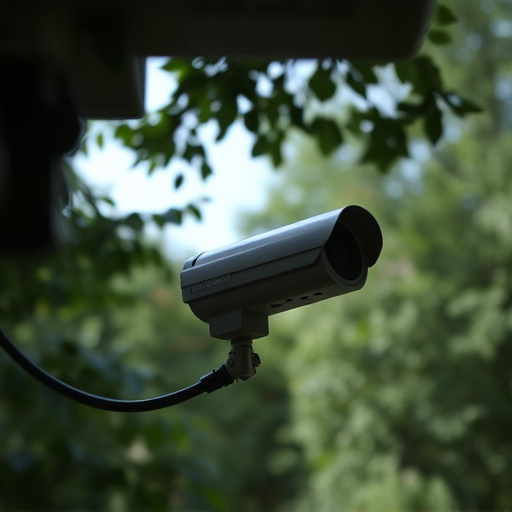
Spy Camera Artificial Intelligence Integration leverages AI to analyze image data, identify glint patterns, and enhance scene interpretation during nighttime surveillance, improving performance by distinguishing genuine objects from false reflections. This technology uses machine learning to process real-time camera feeds accurately, detecting subtle glints in low-light conditions and reducing false positives. Training on diverse nighttime lighting conditions ensures robust performance across various settings. In low-light environments, AI turns challenges into opportunities, enhancing accuracy and adaptability for reliable security operations at night.
In the realm of surveillance, spy cameras face unique challenges during nighttime operations.
Advancing Surveillance with AI: 2026 and Beyond
In 2026, the integration of artificial intelligence in spy camera systems has reached new heights. Advanced machine learning algorithms now employ deep neural networks to analyze complex glint patterns, significantly improving accuracy in low-light conditions. This evolution allows for unparalleled adaptability to dynamic lighting environments, ensuring continuous and reliable surveillance around the clock.
One notable advancement is the ability of AI models to learn from contextual data, understanding the unique characteristics of different locations and objects. This enables them to distinguish between natural glints from streetlights or windows and artificial signals from hidden spy cameras. As a result, false alarms are minimized, enhancing operational efficiency for security professionals.
Furthermore, cloud-based AI platforms facilitate real-time data sharing and collaboration among surveillance teams worldwide. This enables rapid adaptation to emerging threats and ensures that the latest glint detection algorithms are accessible to all, fostering a more robust global security network.
Unveiling Spy Cameras: AI Integration for Enhanced Detection Understanding and overcoming glint issues is crucial for capturing clear images in low-light conditions. This article explores the integration of artificial intelligence (AI) as a game-changer in night-time glint detection for spy cameras. We delve into enhancing AI techniques, real-time analysis, training models with diverse lighting data, and optimizing performance to ensure accurate identification even in the darkest environments.- Understanding Nighttime Glint Challenges in Spy Cameras
- Artificial Intelligence: Enhancing Glint Detection Techniques
- Integrating AI for Real-Time Glint Analysis During Night
- Training Models on Diverse Nighttime Lighting Conditions
- Optimizing Performance: Accurate Glint Identification in Dark
Understanding Nighttime Glint Challenges in Spy Cameras
Nighttime operations pose unique challenges for spy cameras, with glint from artificial light sources becoming a significant issue. Traditional camera lenses can struggle to differentiate between the subtle reflections and the target scene, especially in low-light conditions. This problem is further exacerbated by the wide range of lighting environments that spy cameras might encounter, from dimly lit alleys to brightly illuminated city centers.
The integration of Artificial Intelligence (AI) offers a promising solution to these challenges. AI algorithms can analyze the image data and identify patterns indicative of lens glint, enabling more accurate scene interpretation. By learning to distinguish between genuine objects and false reflections, AI-powered spy cameras can enhance their performance during nighttime operations, ensuring better quality surveillance footage.
Artificial Intelligence: Enhancing Glint Detection Techniques
The integration of artificial intelligence (AI) in spy camera systems has opened up new avenues for enhancing glint detection techniques, particularly in low-light conditions. AI algorithms can analyze vast amounts of data to identify and distinguish between various reflections and glare, ensuring more accurate detection of clandestine activities. By learning from extensive datasets, these intelligent systems can adapt to different environments and object shapes, making them highly effective in night-time surveillance.
This cutting-edge approach leverages the power of machine learning to improve image processing capabilities. Through sophisticated algorithms, the AI can identify subtle glints that might go unnoticed by traditional methods. By integrating AI into spy camera technology, security professionals now have a powerful tool to counter stealthy threats, ensuring better night vision and enhanced operational success.
Integrating AI for Real-Time Glint Analysis During Night
Integrating AI into night-time glint detection offers a revolutionary approach to enhancing security and surveillance. By employing artificial intelligence, systems can now analyze vast amounts of real-time data from camera lenses in low-light conditions, identifying glints with remarkable accuracy. This technology leverages deep learning algorithms to recognize subtle reflections that might go unnoticed by traditional methods, ensuring even the tiniest glint doesn't escape detection.
The process involves training AI models on extensive datasets, including various lighting scenarios and object types, enabling them to differentiate between genuine glints and false positives. Once trained, these models can be seamlessly integrated into surveillance systems, processing video feeds instantaneously. This real-time analysis allows for immediate action when a glint is detected, making it an invaluable tool in preventing potential security breaches or identifying suspicious activities during the night.
Training Models on Diverse Nighttime Lighting Conditions
Training models on diverse nighttime lighting conditions is a critical aspect of developing effective spy camera artificial intelligence integration. To ensure robust performance in real-world scenarios, AI models must be exposed to a wide range of illumination levels and environments. This includes low-light conditions, street lamps, neon signs, and even the reflection of moonlight or starlight. By using extensive datasets that cover these variations, the AI can learn to accurately identify glints from different sources, improving its ability to detect covert cameras in various settings.
Diverse training data also helps the model generalize well. Nighttime environments are dynamic, and lighting conditions can change rapidly. Training on a varied dataset allows the AI to adapt to these changes, making it more reliable for long-term monitoring. This is particularly important in urban areas where nighttime activity and lighting are constantly evolving, ensuring that the spy camera detection system remains effective over time.
Optimizing Performance: Accurate Glint Identification in Dark
In low-light conditions, accurately identifying glints from spy cameras becomes a complex challenge. To overcome this, advanced methods integrate artificial intelligence (AI) to optimize performance. AI algorithms analyze vast image datasets to learn and differentiate subtle glint patterns from regular lighting reflections, ensuring precise detection even in complete darkness.
By leveraging machine learning techniques, these systems can adapt to various environments and obstructions, enhancing accuracy. The Spy Camera Artificial Intelligence Integration method not only improves glint identification but also reduces false positives, making it an invaluable tool for security and surveillance applications that demand discretion and reliability in night-time operations.
The integration of Artificial Intelligence (AI) into spy camera systems has revolutionized night-time glint detection, overcoming challenges posed by varying lighting conditions. By employing AI for real-time analysis during darkness, these models can accurately identify lens glints, enhancing security and surveillance capabilities. Training on diverse datasets ensures the system's effectiveness across various nighttime scenarios, making it a powerful tool for professional surveillance applications.